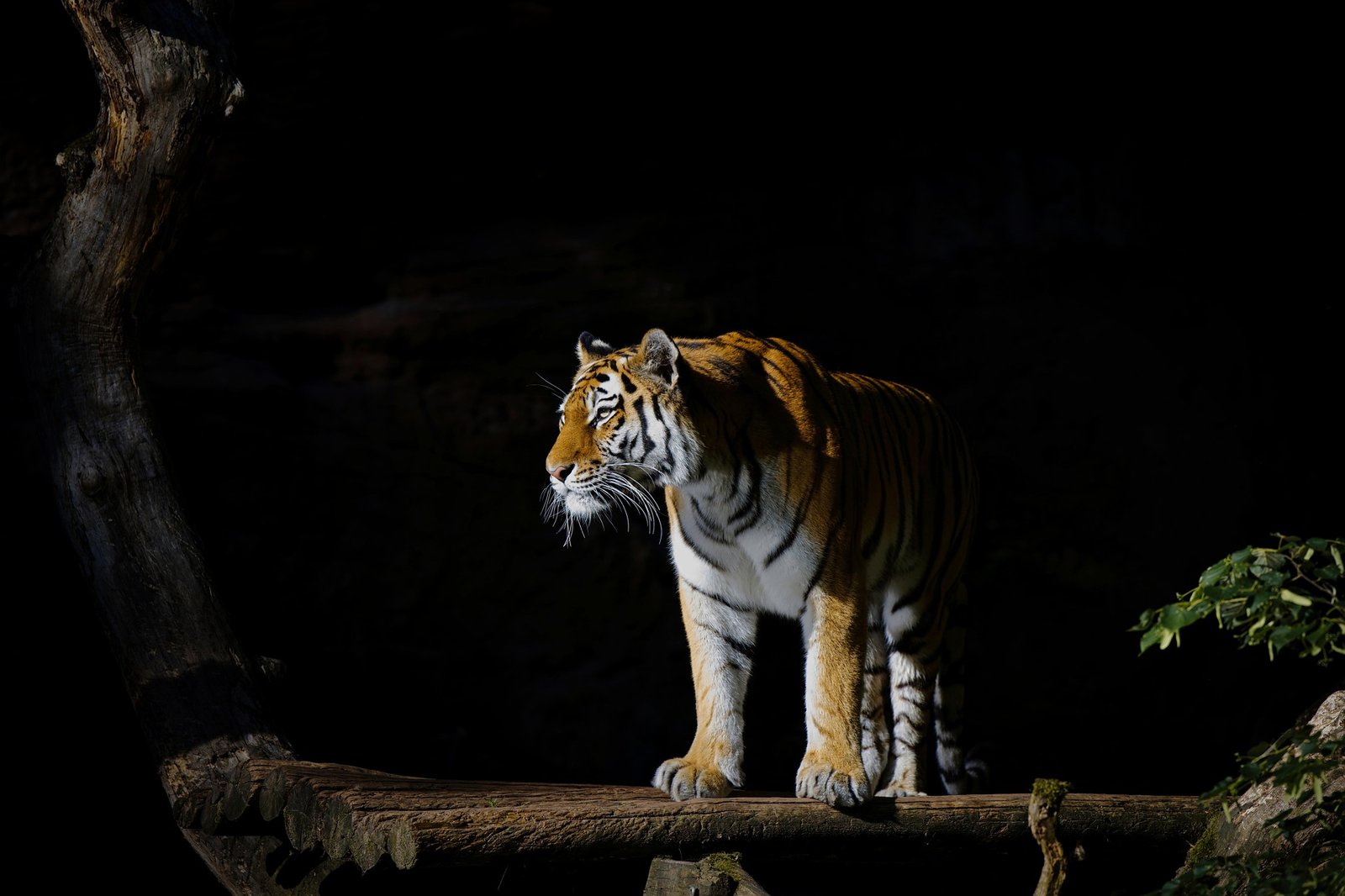
During hunting season in Russia, a local hunter named Vladimir Markov ventured into the forest. After some time, he discovered a wild boar lying in a pool of blood and approached to investigate. Upon examining the boar, he realized it had been attacked. Nearby, Markov noticed pug marks, and moments later, a Siberian tiger ambushed him. Markov managed to draw his Glock and fired at the tiger, injuring it, but the animal fled. Markov left the forest and returned to his cabin. However, the Siberian tiger tracked him for nearly 11 kilometers and arrived at his cabin while Markov was away. The tiger waited there for 48 hours until Markov returned, then killed him, vandalized the cabin, and left no tracks behind. When a rescue team arrived days later, they found only torn clothing, with no trace of Markov’s remains. Remarkably, the tiger covered its own tracks and left no evidence of Markov’s bones.
The question is: did the tiger kill Markov simply because it saw him as a rival trying to steal its kill, or was the attack motivated by vengeance?
Habitat And Concerns
Tigers, as one of the prominent big cats in the wild, serve as both apex predators and protectors of biodiversity. They hold the title of the largest big cats globally. While many believe the lion to be the king of the jungle, and although lions may be larger and heavier, tigers actually surpass them in size. Tigers typically weigh between 250 and 300 kilograms, with Siberian tigers reaching around 300 kilograms. Due to their greater muscle mass, tigers are heavier than lions. They can sprint at speeds of up to 65 km/h. There are nine tiger subspecies, but only six remain today. In 1900, over 100,000 tigers roamed the wild, but their numbers have plummeted by nearly 97%. India is home to the majestic Royal Bengal tiger, accounting for approximately 75% of the world’s wild tiger population. According to the 2022 tiger census, the number of Bengal tigers in India increased from 2,967 in 2018 to about 3,682 in 2022.
Attacking Patterns, Behaviour , And Life Span
Tigers are predominantly solitary creatures, in contrast to lions, which live and hunt in groups known as prides. Tigers prefer solitude and hunt on their own. Being nocturnal, they often choose to attack their prey at night, aided by their exceptional night vision. Tigers are also adept swimmers and enjoy spending time in water, making areas near water bodies their favored hunting grounds. They are masters of ambush, with their uniquely camouflaged fur providing an advantage in surprising their prey. Tigers are also skilled trackers, with a keen sense of smell that aids them in this pursuit. Female tigers have a gestation period of about three and a half months, and tiger cubs are born blind. These cubs remain with their mother for approximately two years, during which they learn essential skills such as hunting, tracking, and navigating difficult terrain. Mother tigers are highly protective, ensuring their cubs receive proper training and safeguarding them from threats posed by other predators. Lions, cheetahs, and hyenas often share the same hunting territories and may attempt to attack each other’s young to reduce competition and prevent future conflicts. After two years, young tigers leave their family to lead solitary lives. They challenge older tigers for territory, prey, and mating rights. Victorious tigers mark their territory with scent to assert their dominance. These territories can span hundreds of miles or cover 150 to 200 square kilometers. Male tigers typically maintain control for about three years.
Why Tigers Matter
Despite being highly skilled hunters, tigers have a hunting success rate of just 10%, meaning they succeed in only one out of every ten attempts. Their powerful bite is lethal, allowing them to kill prey with a single bite, and this one successful hunt can sustain them for several days or even a week without needing more food. Typically, they consume about 40 kilograms of meat in one sitting. Tigers play a crucial role in our ecosystem and have become symbols of beauty, strength, and power. Their conservation is essential for maintaining ecological balance. Tigers are often referred to as flagship and umbrella species, indicating that their protection is key to safeguarding the entire ecosystem. In areas where tigers thrive, forests tend to prosper, and ecosystems remain balanced. The health of the tiger population is a clear and tangible indicator of the overall well-being of forest and grassland environments. Tigers have existed longer than humans, so we should strive to protect them and allow them to coexist with us for many more years.
Did You Know:
Tiger population in India was counted by using the mobile app called M-STrIPES. This app was developed by the National Tiger Conservation Authority and the Wildlife Institute of India. This app uses the tiger stripes of their skin which are unique for every tiger, just like human fingerprints.